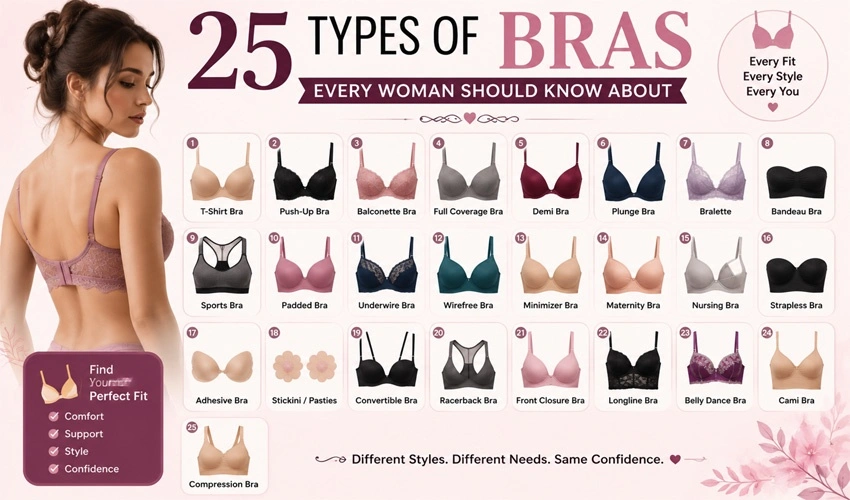
Choosing the right bra is one of those small daily decisions that quietly affects comfort, confidence, and even posture. Yet with so many styles lining store shelves and online catalogs, it is easy to feel overwhelmed by the sheer variety on offer. Every bra style is designed with a specific purpose in mind, whether that purpose is invisible support under a fitted dress, comfort during a workout, or shaping for a particular neckline. Understanding the differences between these styles can make wardrobe planning far simpler and help ensure that every outfit gets the support it deserves. Below is a comprehensive guide to twenty-five types of bras every woman should know about.
1. T-Shirt Bra
The t-shirt bra is arguably the most versatile style in any wardrobe. Made with smooth, seamless cups and minimal stitching, it sits invisibly under fitted t-shirts and tops, avoiding the visible lines that lacy or heavily seamed bras often create. It typically offers moderate padding, making it a reliable everyday choice.
2. Push-Up Bra
Designed to lift and enhance cleavage, the push-up bra uses padded inserts, often angled or gel-based, positioned at the bottom and sides of the cup. This style is popular for eveningwear, low-cut tops, or occasions when extra shape is desired.
3. Balconette Bra
The balconette, sometimes called a balcony bra, features a horizontal cup design with wider-set straps that create a rounded, lifted shape while leaving more of the upper chest exposed. It works particularly well under sweetheart necklines and fitted tops.
4. Plunge Bra
A plunge bra has a deep, low-cut center front, making it ideal for outfits with plunging necklines. The cups are angled to pull breasts closer together for cleavage while keeping the center panel low and discreet.
5. Strapless Bra
Built with reinforced boning or silicone grips along the band, the strapless bra is engineered to stay in place without shoulder straps. It is a staple for off-shoulder tops, strapless dresses, and other structured occasion wear.
6. Sports Bra
Designed with performance in mind, sports bras minimize breast movement during physical activity. They range from light-support styles for yoga and walking to high-impact compression or encapsulation designs suited for running and high-intensity workouts.
7. Racerback Bra
Featuring straps that converge into a Y or T shape at the back, the racerback bra distributes weight more evenly across the shoulders and is especially useful under racerback tops or during workouts that involve significant arm movement.
8. Bralette
A bralette is a soft, often unlined and unwired style, typically made from lace, cotton, or mesh. It prioritizes comfort and a relaxed fit over structured support, making it popular as both loungewear and a fashion statement worn visibly under sheer tops.
9. Wireless Bra
As the name suggests, this style skips underwire entirely, relying instead on the fabric structure, wide bands, and molded cups for support. It has grown increasingly popular for all-day comfort, particularly among those who find underwire irritating.
10. Minimizer Bra
A minimizer bra is engineered to visually reduce breast size by redistributing tissue outward across the chest rather than concentrating it forward. This creates a flatter, more streamlined silhouette under fitted or structured clothing.
11. Full-Coverage Bra
Full-coverage bras are designed with cups that cover the entire breast, offering maximum support and minimal spillage. This style is particularly favored by those with fuller busts who need consistent shape and containment throughout the day.
12. Demi Bra
The demi bra covers roughly half the breast, cutting across at an angle to create a rounded, lifted appearance while showing more skin at the top. It sits between balconette and full-coverage styles in terms of coverage.
13. Nursing Bra
Built specifically for breastfeeding mothers, the nursing bra includes drop-down or clip-away cup panels that allow easy access without removing the entire bra. Soft, stretchable fabric accommodates changes in breast size during the nursing period.
14. Maternity Bra
Distinct from a nursing bra, the maternity bra is designed for the growing and shifting body during pregnancy. It typically offers more room in the band and cups along with soft, stretchable materials that adjust to changing measurements without added structure.
15. Convertible Bra
A convertible bra features detachable or adjustable straps that can be worn in multiple configurations, including crisscross, halter, one-shoulder, or strapless. This versatility makes it a practical option for outfits with unconventional necklines.
16. Backless Bra
Designed for backless dresses and tops, this style uses adhesive cups, low-back straps, or U-shaped strap configurations that stay hidden below an open back while still offering lift and support.
17. Adhesive or Stick-On Bra
For outfits with no straps or back coverage at all, adhesive bras rely on silicone cups that stick directly to the skin. They provide light lift and shape without any visible straps or bands whatsoever.
18. Longline Bra
The longline bra extends further down the torso than a standard bra, often reaching close to the waist. It offers additional back and rib support while also functioning as a shaping layer, similar to a light corset.
19. Corset Bra
Combining structure from traditional corsetry with everyday bra function, the corset bra typically includes boning and a firmer, longer silhouette. It is often chosen for its waist-shaping effect alongside bust support.
20. Bandeau Bra
A bandeau bra is a strapless, tube-like band without individual cup shaping. It offers light support and a smooth, seamless look, making it popular as a layering piece or for those with smaller busts seeking minimal structure.
21. Front-Closure Bra
Rather than the traditional back hook, this style closes at the front, typically at the center of the cups. It appeals to those who find front closures easier to fasten, including many people with limited shoulder mobility or dexterity concerns.
22. Shelf Bra
A shelf bra supports the breasts from underneath without fully covering them, often built directly into camisoles, dresses, or lingerie pieces. It offers a natural, barely-there look while still providing some lift.
23. Cage Bra
A more fashion-forward and often visible style, the cage bra incorporates strappy, geometric detailing across the front, back, or sides. It is generally intended as a statement piece rather than an everyday support garment.
24. Padded Bra
Distinct from the push-up style, a padded bra includes even, non-angled padding to smooth the appearance of the breast, provide modesty by concealing nipple show-through, and add gentle shape without dramatically boosting cleavage.
25. Everyday Comfort Bra (Wire-Free Lounge Bra)
Increasingly popular for at-home wear, this style prioritizes softness above all else, often made from breathable cotton or modal blends with minimal seams, no underwire, and a relaxed band. It has become especially popular for remote work and casual days when structured support is not a priority.
How to Choose the Right Bra for You
With twenty-five distinct styles to consider, choosing the right bra often comes down to matching the garment to its intended purpose. A few guiding questions can simplify the decision:
- What will you wear it under? A t-shirt bra works well under fitted tops, while a plunge or balconette style suits low necklines, and a strapless or backless bra is essential for structured occasion wear.
- What activity will you be doing? Sports bras and racerback styles are built for movement, while bralettes and wireless styles prioritize comfort during rest or casual wear.
- Do you need extra support or coverage? Full-coverage and minimizer bras suit those seeking structure and containment, while bandeau and shelf bras are better suited to lighter support needs.
- Is this for a life stage like pregnancy or nursing? Maternity and nursing bras are specifically engineered for the physical changes that come with these periods and should not be substituted with standard styles.
The Importance of Proper Fit
Regardless of style, proper fit remains the single most important factor in bra comfort and support. A poorly fitted bra, even in the “right” style, can cause discomfort, visible lines, or inadequate support. Getting professionally measured periodically, particularly after weight changes, pregnancy, or extended gaps between fittings, can make a significant difference. Band size should feel snug but not restrictive, and cups should fully contain breast tissue without gapping or spilling over the edges.
Building a Well-Rounded Bra Wardrobe
Rather than relying on a single bra style for every outfit and occasion, building a small rotation across categories tends to serve most wardrobes best. A practical starting point often includes a reliable t-shirt bra for daily wear, a sports bra for exercise, a strapless or convertible bra for occasion wear, a bralette or wireless option for lounging, and a push-up or plunge style for going out. From there, additional specialty pieces like backless, adhesive, or nursing bras can be added based on individual lifestyle needs.
Final Thoughts
Bras are far more varied than most people realize, with each style engineered to solve a specific fit, coverage, or occasion-based challenge. From the everyday reliability of a t-shirt bra to the specialized function of a nursing or maternity bra, understanding these twenty-five styles equips anyone to shop smarter, dress more comfortably, and feel confident under any outfit. Taking the time to learn which bra suits which purpose is a small investment that pays off in daily comfort and long-term wardrobe satisfaction.


More Stories
PogoLinks: Explore Trending Content in One Place
List of Neighbouring Countries of India with Borders and Facts
5 Party Details That Help Guests Stay Longer and Enjoy More